
Why senior women leave law firms, in their own words
“Women may be the one group that grows more radical with age.”
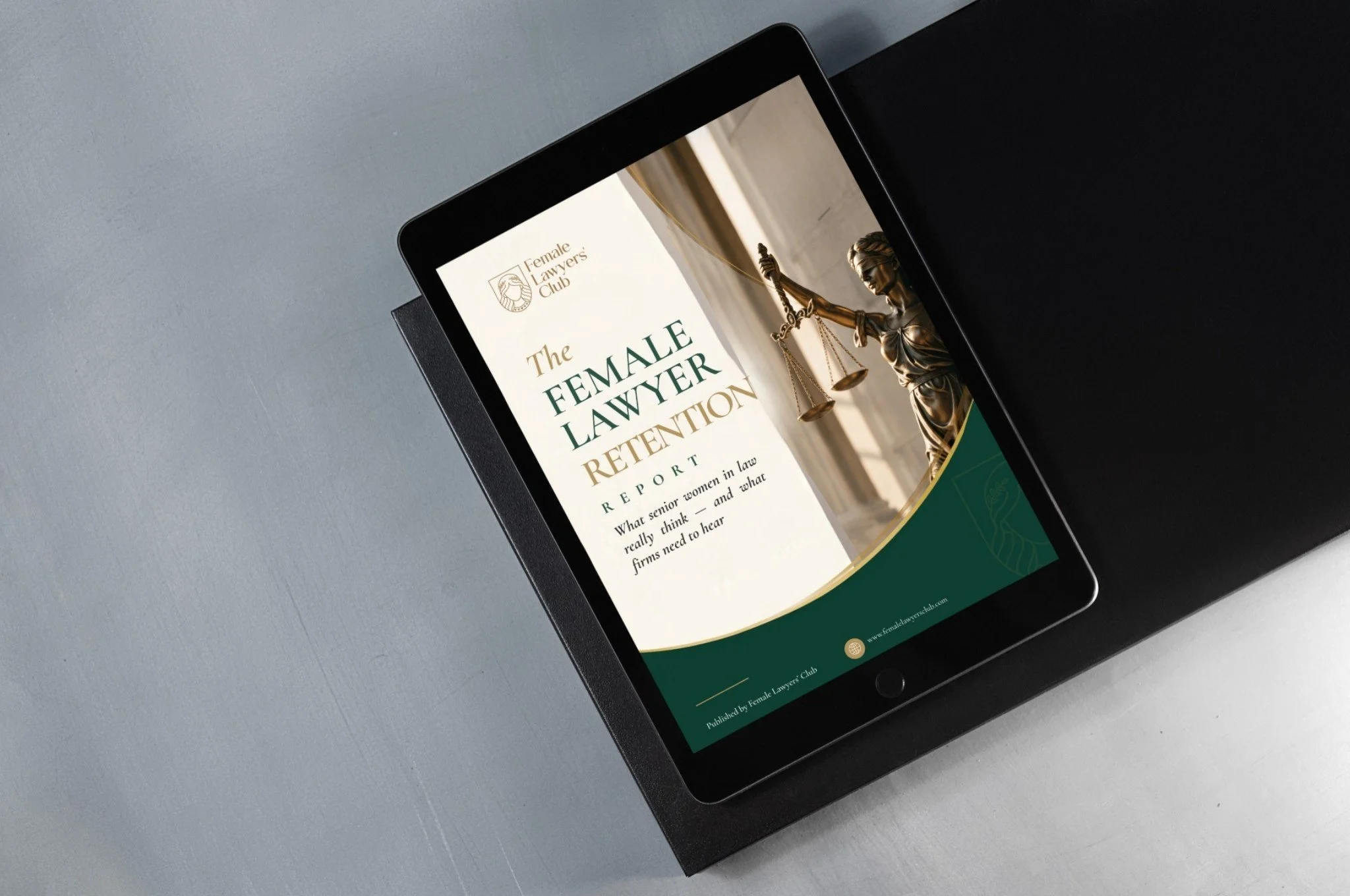
Over the summer, I asked you what law firms could do better to keep you and promote you. In total, 109 of you answered, and today I'm publishing what you said in The Female Lawyer Retention Report. I’ve given a summary of what the report says in this week’s email, but I highly encourage you to read the report itself when you have a minute (the link is below). It’s an eye-opening read and reminds us all not only that the patriarchy is still very much alive and kicking in the legal industry (who knew?!) but, more importantly, gives many ideas on what we and our firms can do about it to make our profession more equitable for everyone.
If you filled in the survey, thank you so much. I know you gave time you didn't have, and you were open and generous with your answers. Some of the answers made me laugh, others made me cry. Despite this, I've kept my own commentary in the report to a minimum, because you said it far better than I could.
Why I ran the survey
Women are still not being promoted to the level they should be in this profession, and mediocre men are still finding it far too easy to rise to the top. Some talented women leave as a result. The women I hear from through Female Lawyers' Club are the ones who stay and work hard to succeed in a system that's still weighted against them. I wanted to know what they would tell their firms if they could speak freely, so I asked them anonymously.
What you told me
Most senior women have thought about leaving. 71% of respondents had seriously considered leaving their firm, or private practice altogether, in the last 12 months. In a firm with 20 senior women, that means around 14 or 15 of them have been weighing up their options this year. The group included equity partners, legal directors and women who spoke positively about their firms. One respondent summed it up:
"It is not a lack of commitment, ambition or drive that prevents us from staying."
Confidence in firms is lower than it should be. Asked how confident they were that their firm is committed to their long-term progression, respondents gave an average score of 3.29 out of 5. More than half scored their firm 3 or below.
The boys' club is still the biggest barrier. When asked what stops women reaching partner level, 69% pointed to informal networks and sponsorship that still favour men. I was acutely aware of this when I set up FLC: it's the very reason I called it Female Lawyers' Club. Close behind, at 68%, came imposter syndrome and confidence gaps. The two are connected, because it's very hard to back yourself when you're not sure your firm is backing you. As one respondent put it:
"I have repeatedly seen less able male colleagues overtake more able women, and find smooth pathways to partnership."
Flexible working is available, but is also often penalised. Most firms have a flexible working policy. The question respondents kept raising was whether it's safe to use. One described flexible working at her firm as "available but punished". Another said her firm allowed flexibility on hours "but ultimately that means promotion is less likely".
The mental load goes well beyond childcare. 64% said caring responsibilities had affected their career progression, and for 21% it had stopped their progression altogether. Respondents described running households, caring for elderly parents and managing menopause symptoms, all while billing, bringing in new work and leading teams.
"Just because someone can't give 130% at work during these years, doesn't mean they aren't committed or ambitious."
Confidence training on its own doesn't solve the problem. Many firms have run confidence programmes and imposter syndrome workshops with the best of intentions. Several respondents pointed out that women then return to exactly the same system, where the referrals still go to the same people and the non-promotable work still ends up largely divided up among the women. One salaried partner wrote:
"You can send us to all the confidence and 'how to beat imposter syndrome' symposiums they like... but if we come back to a system which is still fixed against us... then a critical mass of amazing women will all still reach a point of despair and ask themselves, 'what is the point in all of this?'“
Women without children face assumptions too. Several respondents described careers shaped by assumptions about children they don't have. One was asked, when she was promoted, whether she had gone for the promotion because she intended to get pregnant the following year.
What's working
There's real praise in the report as well, and much of what works costs nothing. A managing partner described leaving the office at 4.30, making sure her team knows it, and logging back on after tea and homework with her daughter. One firm gives six months' paid parental leave to all parents, men and women. An equity partner said it took another partner encouraging her to apply for partnership before she went for it. Respondents at platform and consultancy model firms were, on average, more confident, felt more valued, and were less likely to have considered leaving.
What firms can do
The report ends with practical recommendations, grouped into free, low cost and structural changes. The free ones include:
Sponsor senior women actively. Put their names forward for work, promotion and partnership when they're not there to do it themselves.
Model the behaviour you say you support. If the school run and taking a parent to a hospital appointment are acceptable, senior leaders should be seen doing them, and saying so.
Have honest conversations about progression, early and often. Ask what she wants. Don't assume a woman on maternity leave or working part-time has lost her ambition.
Redistribute the non-promotable work. Audit who is doing the supervision, training and pastoral care, and share it out deliberately.
Encourage women to apply for partnership. Tell her, by name, that you think she's ready.
Why firms should listen
Thanks to the excellent suggestions from the woman who contributed, there is absolute gold in this report for firms that are willing to listen. Those that do will be rewarded. Losing lawyers is expensive. Research by BigHand found that the cost of losing a third-year associate now exceeds $1 million, and a senior woman with 15 or 20 years' experience is worth considerably more than that to her firm. Keeping women in leadership pays off too. McKinsey's 2023 research found that companies with the most gender-diverse executive teams were 39% more likely to outperform financially than those with the least.
The case for acting on these recommendations is a commercial one as much as a moral one, and many of them cost nothing at all. I'm sending the report to as many law firms as I can, and I'd love your help.
If you're in a position to act on this yourself, I'd love to hear from you. If you know someone at a law firm who is, please send the report on to them.
Thank you again to every woman who took part. You've told the profession exactly what needs to change. Whether you lead a firm or know someone who does, you can help make it happen.
Enjoy the rest of your week.
Rachel